
Insights
Temporary Walls vs. Drywall: Which Is Better for Renovation Projects?
Compare temporary walls vs. drywall for speed, cleanup, cost, and flexibility.
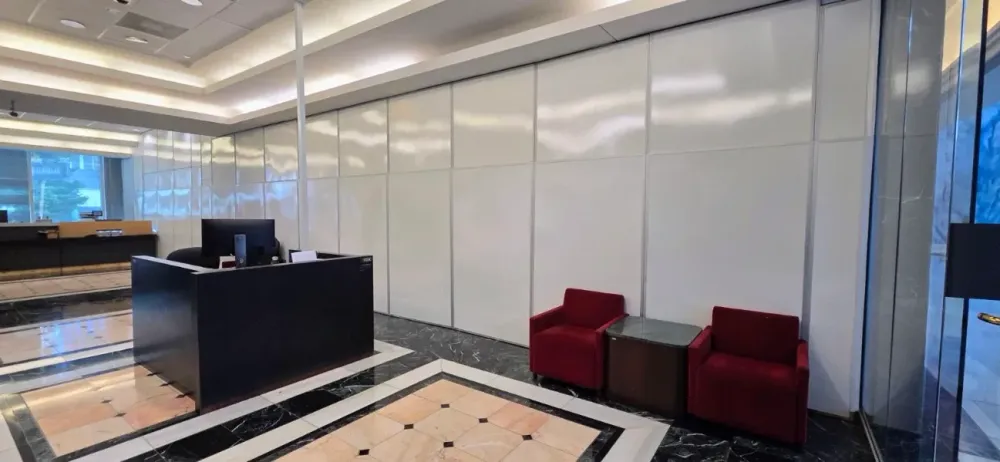
Temporary Walls vs. Drywall: Which Is Better for Renovation Projects?
Temporary partitions are a common part of commercial renovation projects, but contractors have more than one way to build them.
For years, the default solution has often been simple: frame a temporary wall, hang drywall, finish it, and tear it down when the project is complete.
That works but it is not always the most efficient option.
Reusable modular temporary walls offer another approach. Instead of constructing and demolishing a new partition for every project or phase, finished wall panels can be installed, relocated, and eventually removed.
So when should a contractor use modular temporary walls instead of drywall?
The answer depends on the project.
How Temporary Drywall Works
A traditional temporary drywall partition is essentially a short-lived version of a permanent wall.
The contractor typically has to:
- Frame the wall
- Install drywall
- Finish joints
- Sand and potentially paint
- Add doors or access points
- Demolish the wall when it is no longer needed
- Remove and dispose of the debris
For a simple project where the wall will remain in one location for a long period, this approach may still make sense.
The drawbacks become more noticeable when the facility remains occupied or when the containment has to move multiple times.
How Modular Temporary Walls Are Different
Modular temporary walls arrive as finished, reusable panels.
Rather than building a partition from raw materials, an installation team assembles a temporary wall system designed specifically for renovation and containment.
When the project progresses, those same panels can often be taken down and reconfigured elsewhere.
When the project ends, they are removed instead of demolished.
This makes modular walls especially useful for projects involving phased construction, occupied facilities, or public-facing environments.
1. Installation and Removal
One of the biggest differences is the amount of work required to create the finished barrier.
Drywall requires several construction steps before the partition is complete. It also creates another construction activity when the wall eventually has to be demolished.
Modular temporary walls reduce those steps because the panels already have a finished surface.
For contractors working on tight schedules, that can make containment easier to coordinate with the rest of the project.
Removal is also different.
Instead of breaking down drywall and generating additional debris, a modular system can be disassembled and removed.
That difference can be particularly valuable inside occupied buildings.
2. Phased Renovations
Consider a renovation that moves through several sections of a hospital, hotel, airport, or office building.
With drywall, the project may require building one temporary partition, demolishing it, and then constructing another partition for the next phase.
With modular walls, the same system can often be relocated.
That makes temporary walls particularly well suited for projects where containment requirements change as construction progresses.
At Trident Walls, our full-service approach can include scheduled redeployments during multi-phase projects so the contractor does not have to coordinate the wall moves separately.
3. Dust and Debris
Temporary drywall does its job once it is built, but building and removing it are construction activities themselves.
Cutting, sanding, finishing, and demolition can all introduce additional dust or debris into the project environment.
Modular wall systems minimize many of those activities because the panels are reusable and arrive finished.
That can be especially beneficial in:
- Hospitals and healthcare facilities
- Hotels
- Airports
- Corporate offices
- Retail environments
- Schools
- Datacenters
- Other occupied buildings
In these environments, keeping the construction zone separated is important but so is avoiding unnecessary disruption while creating that separation.
4. Appearance
Sometimes the temporary wall is hidden deep inside the construction zone.
Sometimes it is the first thing a patient, hotel guest, customer, tenant, or employee sees.
That changes the equation.
Finished modular panels can create a cleaner, more consistent appearance than a temporary partition that was framed and finished onsite.
For a six-month renovation running directly alongside a public corridor, lobby, or waiting area, appearance can become an important part of the owner's experience.
Temporary construction does not necessarily have to look temporary.
5. Waste and Reuse
Drywall is generally treated as a consumable material on temporary partitions.
Once the partition is demolished, much of that material becomes construction waste.
Modular temporary walls are designed to be used again.
The same panels can potentially serve multiple phases and multiple projects rather than being discarded after one installation.
For contractors and owners increasingly focused on reducing construction waste, reusable containment provides another option worth considering.
6. What About Cost?
The lowest material cost does not always equal the lowest project cost.
When comparing temporary drywall and modular wall rental, contractors should consider more than the price of the panels or sheets of drywall.
The comparison should include:
- Installation labor
- Finishing labor
- Painting, if required
- Demolition
- Disposal
- Project duration
- Number of phases
- Number of wall relocations
- Site cleanliness requirements
- Public-facing appearance
- Schedule impact
For a straightforward wall that stays in one place, drywall may remain a practical option.
As projects become more complicated the advantages of modular containment can become more significant.
When Should You Consider Modular Temporary Walls?
Temporary modular walls are worth considering when:
The building will remain occupied.
Clean installation and professional appearance become more important.
The project has multiple phases.
The same panels can be redeployed as the construction zone changes.
Containment is important.
Healthcare and other sensitive environments may require more sophisticated separation between construction and occupied spaces.
The wall is highly visible.
Hotels, airports, hospitals, offices, and retail facilities often want a finished appearance during construction.
The project team wants a managed containment scope.
A full-service provider can handle planning, installation, relocation, support, and removal.
The Right Solution Depends on the Project
Temporary drywall is not going away, and there are projects where it remains a perfectly reasonable solution.
But it should no longer be the automatic choice for every temporary partition.
For occupied renovations, phased projects, and environments where cleanliness and appearance matter, reusable modular temporary walls can provide contractors with a much more flexible approach.
Trident Walls provides full-service temporary wall rentals for construction, healthcare, renovation, and other occupied environments. Our team can help scope the layout, install the system, support project phasing, relocate walls when required, and remove them when construction is complete.
Have an upcoming project? Send Trident Walls your drawings or project details and we can help determine whether modular temporary walls make sense for your job.